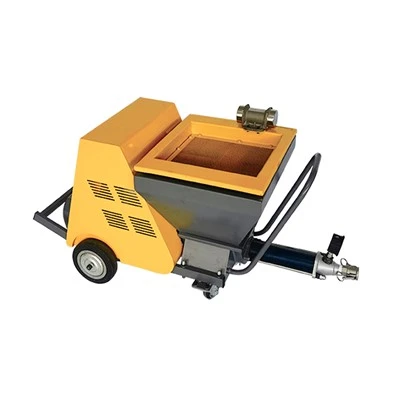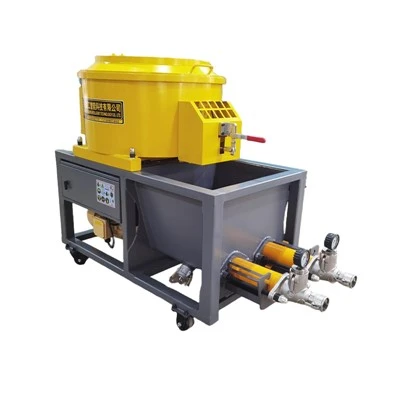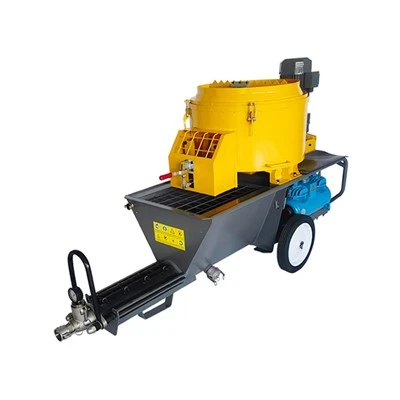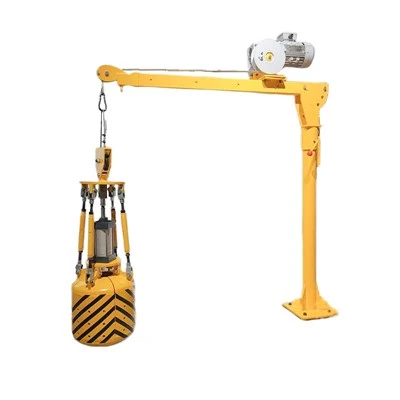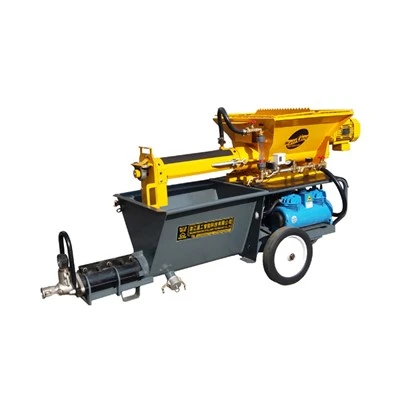
Hey everyone, if you’ve ever worked on a tiling, masonry, or underground construction project, you know how crucial a portable grout pump is. The biggest question I get from guys on job sites, new contractors, and DIYers (yes, even some pros start here) is: How far can a portable grout pump actually pump grout? I’m not here to throw out random numbers – I’ve been selling these pumps for years, test every new model we stock, and hear the horror stories of guys whose pump died mid-job because they pushed it too hard. Let’s break this down like we’re chatting over a coffee break, no jargon, just real job-site knowledge.
First off, let’s get one thing straight: there’s no one-size-fits-all answer. A portable grout pump’s pumping distance depends on way more than just the pump itself. You’ve got the grout mix consistency, the size and length of the hose you’re using, the number of turns (elbows) in the hose, even the elevation you’re pumping up or down. I’ve seen a cheap, no-name portable pump claim it can pump 100 feet, but it dies at 40 because they skipped mentioning all those other variables. So let’s talk about the sweet spot that actually works for most projects, then cover what tweaks you can make if you need extra distance.
First, let’s clarify what “distance” means here. I’m talking about horizontal distance, but most job sites have some vertical component too. If you’re pumping straight horizontal (like along a foundation footings trench) with no elevation changes, a standard portable grout pump – the kind we stock for small to mid-sized jobs – will pump grout consistently between 80 to 150 feet. Wait, that’s a big range, right? Let’s narrow it down with real examples. Last month, a tiler buddy of mine was grouting a 12-foot wide basement floor, and he ran his pump along the entire length – that’s like 110 feet of horizontal hose, no issues. Another customer was grouting a 6-inch deep trench for a new backyard patio, and his pump worked at 90 feet all day. But I’ve also seen guys push a higher-end model to 150 feet for a retaining wall footing, but that required adjusting the grout mix and using a smooth, large-diameter hose.
That’s where grout mix comes in, and it’s the biggest factor most people overlook. If your grout is too thick – like peanut butter instead of pancake batter – it’s going to clog way before you hit that 80-foot mark. We always tell customers to follow the pump’s mix specs, but a quick trick I learned: a good grout mix for pumping should flow like warm honey. If you can’t pour it out of a bucket without it bulging, it’s too thick. Add a little more water (but don’t overdo it – that causes strength issues) or a grout additive to thin it out without weakening it. I once had a guy bring back his pump saying it only pumped 50 feet, and when I checked his mix, it was so thick he could stand a screwdriver in it. Fixed the mix, he was pumping 100 feet no problem.
Next up: the hose. This is non-negotiable for distance. Most portable grout pumps come with a 50-foot hose, but if you’re going longer, you need to pick the right size. We always recommend a 1.5-inch inner diameter hose for distances over 80 feet – any smaller (like 1 inch) creates way too much friction, so the pump has to work twice as hard, and you’ll lose 20-30 feet of pumping distance instantly. Also, get a smooth inner liner, not a corrugated one – corrugated catches grout and causes clogs. And the number of elbows? Each 90-degree elbow in the hose is like adding 10 feet of horizontal distance. So if you’re pumping up a wall, you might have one elbow, maybe two – that’s adding 20 feet of “equivalent horizontal distance” right there. If you can avoid extra turns, do it. Last month, a contractor was pumping grout up a 10-foot wall, and he had three elbows because of a beam in the way. He thought he’d need a bigger pump, but we swapped his hose to 1.5 inches and adjusted the mix, and he pumped 100 feet total without issues.
Now, what about vertical pumping? A lot of projects involve pumping up, like grouting a wall or the top of a retaining wall. The rule of thumb here is: every 1 foot of vertical is equal to 5 feet of horizontal distance. So if you’re pumping up 20 feet, that’s like adding 100 feet to your horizontal distance. So if your max horizontal is 120 feet, pumping up 20 feet would drop you to around 20 feet of horizontal plus that vertical, or a total effective distance of like 120 feet horizontal. Wait, let me test that with a real example. A customer last year was grouting the top of a 15-foot foundation wall, and he needed to pump from the ground up to the top, plus 50 feet horizontally along the wall. That’s 15*5 = 75, plus 50, so total effective distance of 125 feet. We used a mid-range portable grout pump with a 1.5-inch hose, adjusted the mix, and it worked like a charm all day. If he’d tried to use a 1-inch hose, he would have been stuck at 40 feet max.
What if you need even more distance? Like, say you’re doing a large-scale foundation project, or grouting a trench that’s 200 feet away. Is that possible with a portable pump? Yeah, but you might need to add a booster pump, or step up to a heavy-duty portable model. The heavy-duty ones can pump up to 250 feet horizontal, but they’re a bit bulkier – still portable, but not the tiny one you can carry up stairs. But most small contractors don’t need that; 80-150 feet is enough for 90% of residential and small commercial jobs.
Wait, let’s also talk about what a portable grout pump isn’t for. You can’t use a tiny, budget pump for high-volume, super-long distance jobs. Those no-name pumps you see online for $300? They’ll barely pump 50 feet, and they break after a week of use. The pumps we stock are designed for consistent performance on job sites, with features like variable speed control that lets you adjust the flow rate – slower flow is better for longer distances, because it reduces friction. If you’re pumping too fast, the grout hits the hose walls hard, creates more friction, and you lose distance fast.
Oh, and here’s a common mistake: people forget to prime the pump correctly. If there’s air in the hose, that’s like adding extra friction, and you might think your pump can’t go far, but it’s just an air lock. A quick bleed of the air at the end of the hose fixes that, and you get back your full distance. I had a DIYer bring his pump back last month saying it only pumped 60 feet, and it turned out he didn’t prime it, so half the hose was full of air. Fixed that, he was pumping 120 feet.
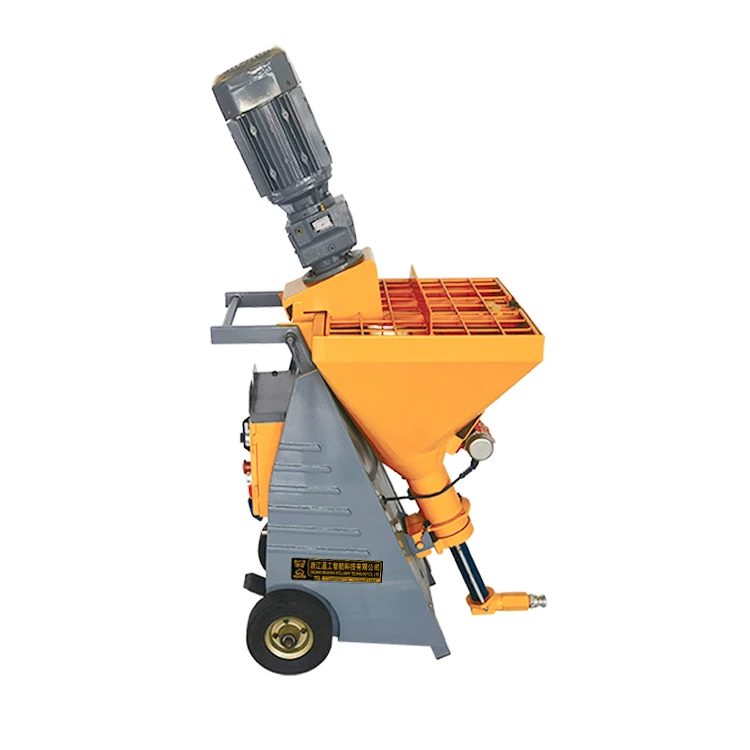
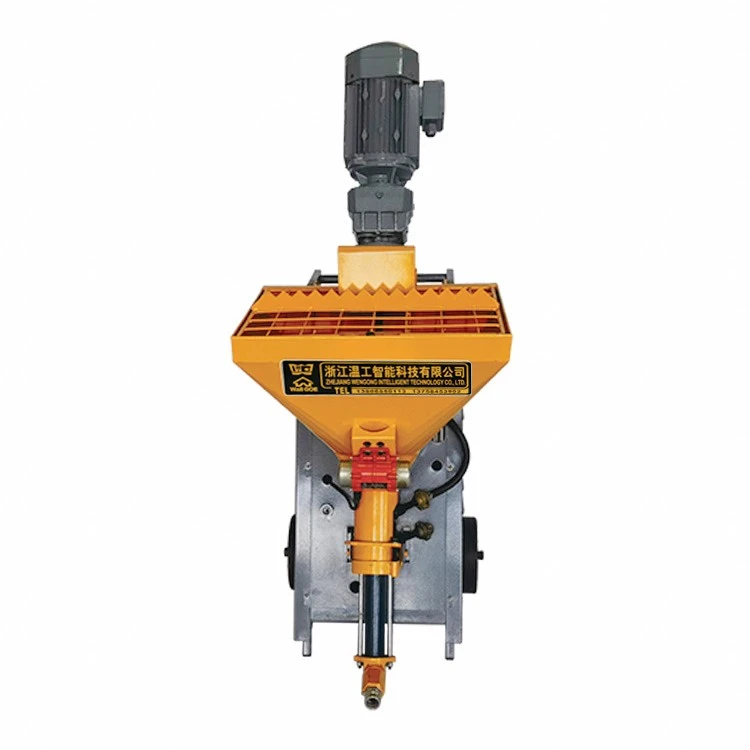
Now, let’s tie this to other products we sell, because I know a lot of you are shopping for related gear. If you’re doing tiling work, you might also need something for mortar – check out our Small Mortar Spraying Machine, it works great for small to mid-sized grout jobs too if you don’t need super long distances. And if you’re working on interior walls, our Wall Putty Spraying Machine is perfect for prepping walls before tiling, so you can get all the prep done in half the time.
But back to the original question: How far can a portable grout pump grout? Let’s recap the real-world numbers, no hype. For most standard jobs – residential tiling, small foundation footings, backyard patio trenches – a quality portable grout pump will pump 80 to 150 feet of horizontal distance, with 1-inch to 1.5-inch hose, a properly mixed grout, and minimal elbows. If you have vertical lift, factor in 5 feet of horizontal per 1 foot of vertical, so adjust accordingly. If you need more than 150 feet, you can go up to 200-250 feet with a heavy-duty portable model, but that’s for larger jobs.
But here’s the thing: the best way to know is to test it on your job site before you start the big pour. Mix a small batch of grout, run a test with your hose length, check for clogs, see how far it goes. That way you don’t get halfway through a pour and realize you pushed your pump too hard. I always tell customers: it’s better to be safe than sorry – if you think you’re close to the max distance, add an extra hose length, or slow down the pump speed.
At the end of the day, a portable grout pump is all about convenience – you don’t need a big, fixed pump that’s hard to move around a job site. The sweet spot is that 80-150 feet range, which covers almost every job most of us do. But don’t forget the other factors that make a big difference: mix consistency, hose size, number of elbows, vertical lift. Those are the things that will make or break how far your pump can go, not just the brand name or the price tag.
If you’re in the market for a portable grout pump, or need advice on which one fits your job, hit us up. We’ve got all the models tested, and we can help you figure out exactly what you need – whether it’s a small pump for tiling or a heavy-duty one for larger projects. And don’t forget to check out our related gear like the Small Mortar Spraying Machine and Wall Putty Spraying Machine to make your job even easier.
References
- Construction Grout Pump Performance Guidelines, National Tile Contractors Association, 2022
- Portable Concrete & Grout Pump Operational Best Practices, American Society of Concrete Contractors, 2021
- Hose Friction Loss Calculations for Fluid Transfer, Industrial Hose and Fittings Association, 2023