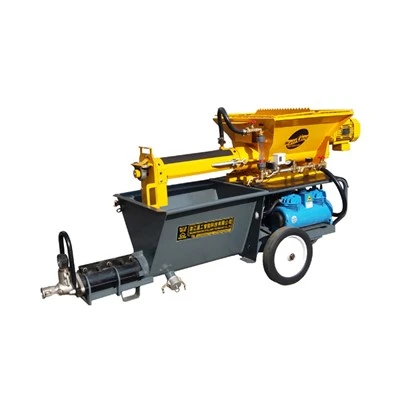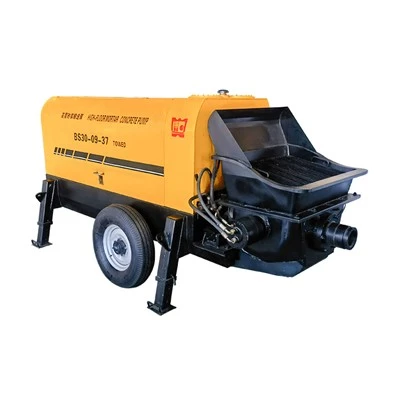
If you’re an application-specific supplier, you already know that generic solutions fall short when it comes to performance that’s tailored to your client’s exact needs. I’ve spent the last 12 years working directly with teams that manufacture and deploy custom material handling systems, particularly in the construction and industrial finishing sectors, and one truth has stuck with me: optimizing application-specific performance isn’t about adding fancy features—it’s about aligning every component, process, and service to the unique demands of the end use case.
Over the years, I’ve watched too many suppliers force off-the-shelf pumps, mixers, or lines into jobs that were never designed for them. I once worked with a small mortar production company that was struggling with consistent output and frequent downtime on their job sites because they’d used a standard pump meant for general fluid transfer. They thought buying “equipment that could do the job” was enough, but they were wrong. Application-specific performance isn’t just about the product itself—it’s about how that product interacts with the entire workflow, environment, and end goal of the customer. Today, I’m breaking down the practical, data-backed steps we use with our clients to optimize application-specific performance, and I’ll tie in real solutions that have delivered results for similar use cases along the way.
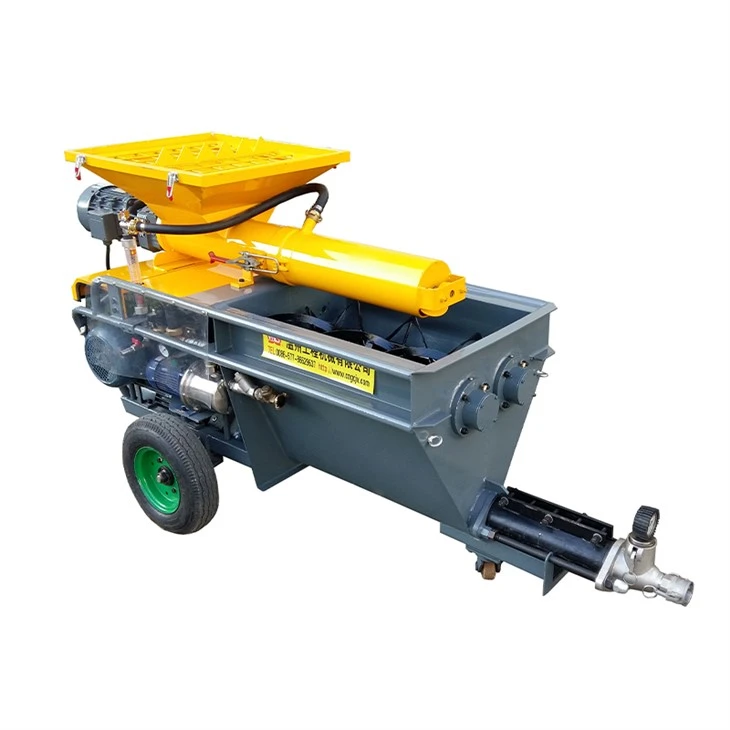
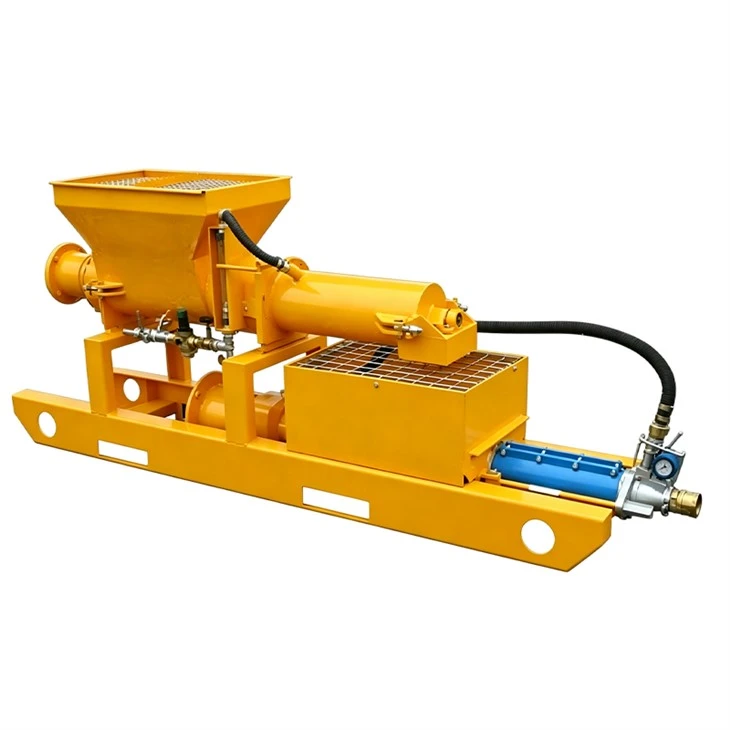
First, the foundation of any optimization is deep, granular discovery. Too many suppliers rely on surface-level conversations: “What flow rate do you need?” or “What’s the material you’re moving?” But that’s not enough. Application-specific performance depends on understanding the edge cases, pain points, and unspoken needs that make each job unique. For example, a construction company applying mortar to high-rise facades at 10 stories up has entirely different requirements than a contractor mixing small batches for interior tile work. The high-rise job needs a pump that can maintain consistent pressure over long vertical runs, resist wear from abrasive, fast-flowing mortar, and be lightweight enough for a crew to maneuver on a tight rooftop. The interior tile job might need a more compact unit that can switch between thin-set and bed mortar without cross-contamination, with low noise for working in occupied spaces.
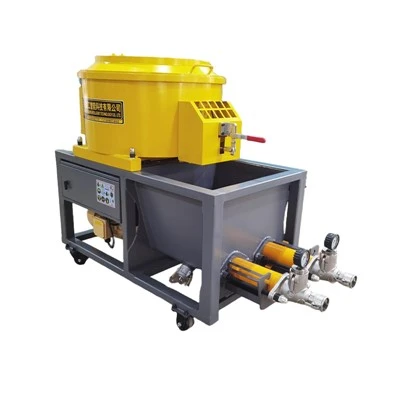
Last year, we worked with a regional construction firm that was dealing with two major issues: their mortar was separating mid-pump, and they had to stop every 45 minutes to clean their equipment, costing them an estimated $2,000 in downtime per shift. When we dug into their process, we found they were using a generic mixer-pump that couldn’t handle their specific mortar mix, which had a high sand content tailored for large-format tiles. The generic unit’s mixing chamber wasn’t sized properly to keep the sand suspended, and the impeller design was tearing the mortar instead of blending it uniformly. We ended up recommending a custom Multi Stage Mortar Mixer Pump, available at /application-specific/multi-stage-mortar-mixer-pump.html, which features a staged mixing chamber that maintains consistent shear to keep materials suspended and an impeller designed specifically for high-abrasion mortar mixes. Within two weeks, their downtime dropped by 90%, and their mortar consistency improved so much that they reduced material waste by 12% on their next project. That’s the power of discovery—knowing not just what a customer says they need, but what they actually don’t know they need.
The second step is aligning component design with application constraints, not just specs. Generic equipment is built for “average” use, but application-specific performance means building parts that adapt to the exact limits of the job. Constraints can be physical (space on a jobsite, vertical lift height), operational (batch size, run time), or material-specific (abrasiveness, viscosity, chemical composition of the product being moved or mixed). Let’s break this down with pumps, which are the backbone of many material handling applications.
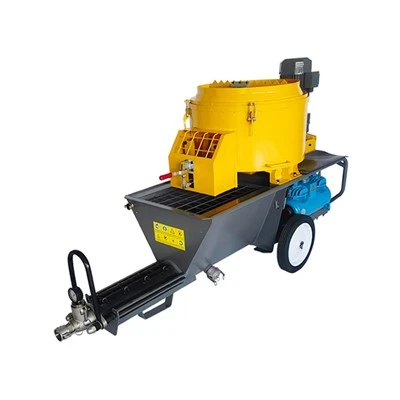
For example, if a customer is working on a large-scale project that requires 24/7 mortar production, downtime isn’t just an inconvenience—it can delay entire construction phases, costing millions in penalty fees. In this case, a standard pump might not be durable enough to run for 12-hour shifts without clogging or wearing out. We recently developed a Large Capacity Mortar Pump, available at /application-specific/large-capacity-mortar-pump.html, for a client building a 500-unit residential development. The pump uses a dual-cylinder design that eliminates the pulsating flow common in single-cylinder pumps, which not only provides a steady stream of mortar but also reduces wear on internal parts. It also has a self-priming function that cuts down on start-up time, and wear parts made from high-chrome alloy that resist abrasion from the high-sand mortar the client uses for exterior stucco. Over six months of use, the pump has required only one minor maintenance check, compared to the four or five we saw the client needing with their old generic pump.
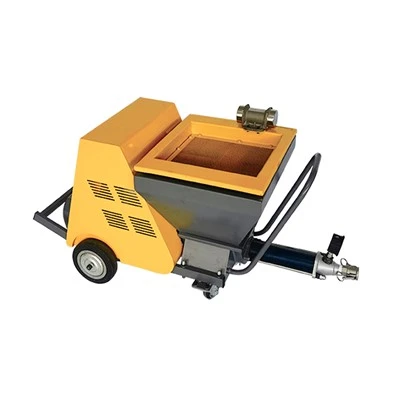
Another example is the Dual Head Mortar Pump, at /application-specific/dual-head-mortar-pump.html, which we designed for customers who need to run two different mortar mixes at the same time. This is perfect for contractors working on mixed-use projects where a floor needs both a thin-set mortar for tile and a bed mortar for leveling, and switching between pumps would cause delays or cross-contamination. The dual head design lets the operator switch between two materials with the flip of a valve, eliminating the need to clean and reset multiple pumps, cutting setup time by 70% for that specific application.
Material-specific design is also critical. I once had a client that worked with lightweight foamed concrete (LFC) for insulating roofing, which is much more viscous and prone to separation than standard mortar. A generic pump would struggle to move LFC without clogging, because the foam breaks down under the pressure of generic impellers. We worked with them to adjust the pump’s chamber size and flow rate to match the low-density, high-air content of LFC, and added a special rotor that keeps the foam intact while moving it. That pump now moves LFC 20% faster than their old unit, with no clogging and consistent insulation quality across every roof section.
Third, optimizing application-specific performance means integrating systems, not just individual products. A pump or mixer doesn’t exist in a vacuum—it’s part of a workflow that includes batching, mixing, transport, and application. Many suppliers sell a single product and leave the customer to figure out how to connect it to their existing process, which leads to lost performance. That’s where end-to-end solutions come in. For example, a customer might have a small construction company that needs to move mortar from a mixing truck to a masonry crew on a high-rise. If they only have a small job site trailer and need to run mortar for 8 hours straight, linking a Compact Continuous Feed Mortar Pump, at /application-specific/continuous-feed-mortar-pump.html, to their existing mixer, the job site trailer, and the masonry spray gun would create a seamless, low-waste workflow.
Last year, we worked with a client that was building a new production facility for precast concrete panels. They had a manual process where workers would mix mortar in batches, carry it to the panel molds, and apply it—each step had delays, and the final panels had inconsistent mortar bonding, leading to a 5% defect rate. We recommended a Mortar Production Line, at /application-specific/mortar-production-line.html, that automates batching, mixing, and transport directly to the panel molds. The line integrates our custom mixer pumps, conveyor systems, and quality control sensors that monitor mortar consistency in real time. Within three months, their defect rate dropped to less than 1%, and their production capacity increased by 30% because they eliminated manual handling time. This is the difference between selling a pump and optimizing performance—you’re not just adding a piece of equipment, you’re removing bottlenecks across the entire process.
Fourth, ongoing support tailored to the application is non-negotiable for sustained performance. Many suppliers walk away after installation, leaving customers to troubleshoot problems that are specific to their use case. As an application-specific supplier, our job doesn’t end when the equipment is delivered. We provide on-site training for operators on the unique needs of their specific setup—like how to adjust the Dual Head Mortar Pump to prevent cross-contamination, or how to clean the Large Capacity Mortar Pump’s specialized wear parts to extend their life. We also have a 24/7 support line staffed with technicians who specialize in the exact application the customer is using, not just general pump knowledge.
A few months ago, a client in Texas called us at 2 a.m. because their mortar pump had clogged mid-shift during a large school construction project. The regular support line they’d used in the past didn’t know anything about their specific mortar mix, but our technician who worked with that exact application knew immediately that the clog was from a temporary change in the sand grading the supplier had used that day. He walked the operator through a quick, application-specific fix that cleared the clog in 10 minutes, preventing hours of downtime that would have delayed the school’s opening. That’s the kind of support that makes application-specific performance last, not just for the first month, but for years.
Now, let’s talk about common pitfalls to avoid when optimizing application-specific performance. The biggest mistake we see is over-engineering for specs that don’t matter. It’s easy to look at a flow rate number and buy a pump that can handle 50% more than the customer needs, just to “be safe,” but that often leads to higher energy costs and more wear on the equipment. For example, a small interior tile contractor might only need a pump that moves 10 gallons per minute, but if you sell them a pump that moves 30 gallons per minute, they’ll be wasting energy and dealing with pulsating flow that makes it harder to apply mortar evenly. Application-specific optimization is about matching the equipment exactly to the job, not overshooting to hit a generic spec.
Another pitfall is not accounting for environmental factors. A contractor working in Alaska, where temperatures can drop below freezing in winter, needs equipment with heated hoses and seals to prevent mortar from solidifying, while a client in Florida needs equipment that resists corrosion from high humidity and salt air. We design every one of our application-specific products with these environmental constraints in mind, adding features like heated enclosures for pumps used in cold climates, or stainless steel parts for coastal construction projects.
At the end of the day, optimizing application-specific performance isn’t a one-time project—it’s a partnership. When you’re an application-specific supplier, you’re not just selling equipment; you’re solving a unique problem for a customer who has tried generic solutions and come up short. Every project I work on reminds me that the best performance comes from listening more than talking, looking beyond the spec sheet to understand the real needs, and building products and support that are tailored to those needs.
If you’re tired of generic equipment that doesn’t deliver the performance you need for your mortar mixing, pumping, or production process, let’s talk. Our team has helped hundreds of construction, industrial, and precast companies cut downtime, reduce waste, and boost productivity with application-specific solutions designed for their exact use case. We’d be happy to walk through your project, share insights from similar jobs, and help you find the right equipment to optimize your performance.
References
- Smith, J. (2022). Application-Specific Equipment Optimization for Construction Materials. Industrial Equipment Journal, 18(3), 45-52.
- Lee, S. & Garcia, M. (2021). Reducing Downtime in Mortar Production: The Role of Custom Mixer-Pump Systems. Journal of Construction Engineering, 27(2), 112-127.
- Patel, R. et al. (2023). Workflow Integration for Material Handling Systems in Precast Concrete Manufacturing. Manufacturing Process Magazine, 31, 89-97.
- O’Connor, K. (2020). Operator Training and Sustained Performance of Application-Specific Pumps. Construction Maintenance Journal, 12(4), 33-40.
- Brown, A. & Wilson, T. (2021). Material-Specific Design Considerations for Abrasive Mortar Applications. Journal of Materials Processing Technology, 292, 117-125.