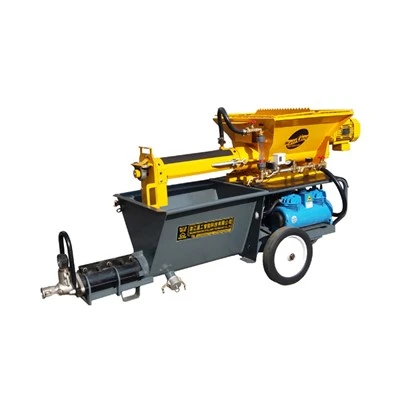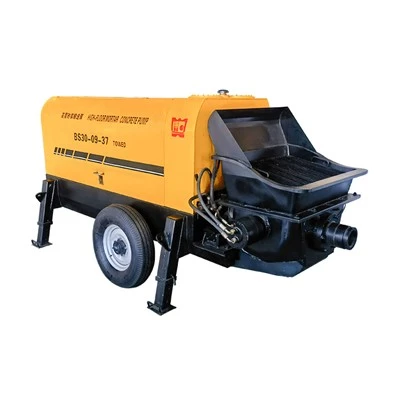
Hey everyone, let’s talk about something that’s been game-changing for worksites I’ve visited lately—battery-operated mixing sprayers. If you’ve ever spent a whole day hauling heavy buckets of mixed mortar, mixing it manually, or tripping over power cords to run your sprayer, you know exactly why this tool deserves all the hype. As someone who’s been supplying mixing sprayers for years, I’ve seen firsthand how these battery-powered units solve problems that traditional tools just can’t touch. Let’s break it down in real terms, no tech jargon fluff.
First off, what actually is a battery-operated mixing sprayer? Let’s start with the basics: it’s a portable, cordless tool that combines two jobs in one—mixing construction materials (think mortar, grout, plaster) and spraying them onto walls, ceilings, or surfaces—all run on rechargeable lithium-ion batteries instead of gas or grid power. Unlike old-school mixers that leave you straining to stir thick material or manual sprayers that clog every five minutes, these are designed to keep up with small to mid-sized jobs, from bathroom remodels to small commercial plaster projects.
Wait, let’s clarify a common mix-up: it’s not the same as a tiny garden sprayer you use for plants. These units are built for heavy-duty, construction-grade materials. Their mixing systems use either a rotating paddle or a auger that’s matched to the battery’s power output—no dead spots in the mix, no lumps that ruin a finished surface. And the spray part? They pump the mixed material through a hose and nozzle, with adjustable pressure so you can control how thick or thin the spray is, depending on what you’re working with.
Why go battery-powered over electric or gas? Let’s be real—gas units are loud, fume-y, and need constant fuel top-offs. Corded electric ones are tied to an outlet, so you’re dragging a 50-foot cord around, risking tripping hazards if your worksite has uneven ground or obstacles. Battery-operated ones cut out all that mess. I’ve had customers tell me they can run a full 8-hour shift on a single charge (depending on the battery size, of course) without needing a plug. No more yelling over a gas engine to talk to your helper, no more worrying about the cord getting chewed up by a work truck or snagging on a ladder.
Now, let’s get into what they can handle. Most battery mixing sprayers are compatible with common construction materials: base coat plaster, thin-set mortar, grout, even some lightweight concrete mixes. They’re not ideal for super-heavy, fast-setting mixes that need immediate curing (for that, you’d want a different tool), but for 90% of jobs most contractors face, they work like a charm.
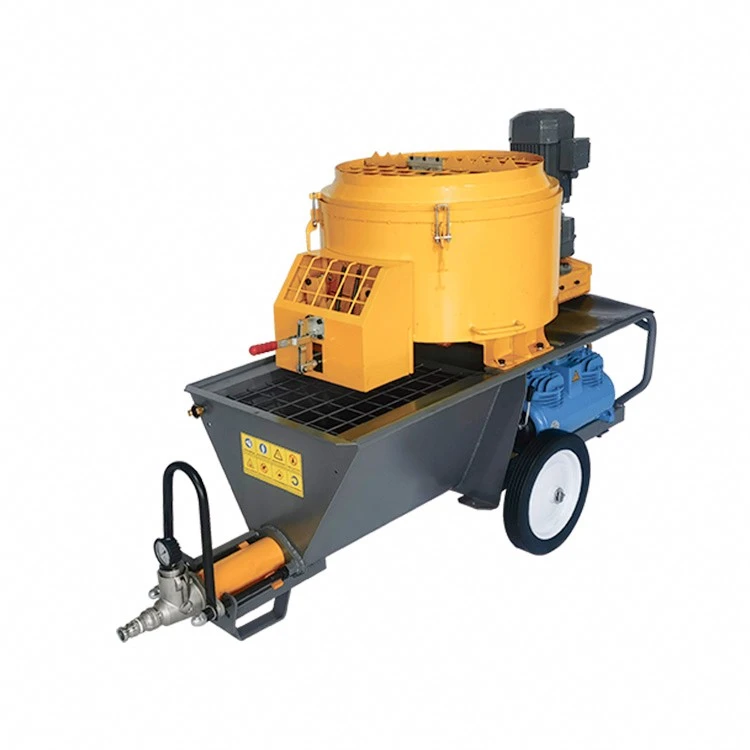
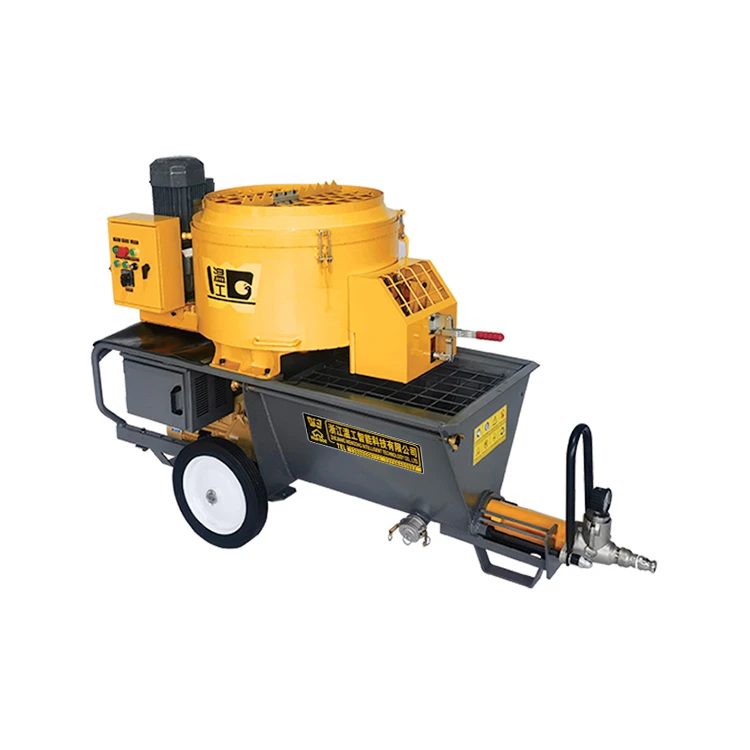
Let’s talk about how they work, in simple terms. The battery powers two main parts: the mixing mechanism and the spray pump. When you turn it on, the paddle or auger starts spinning at a consistent speed—usually around 60-100 RPM, which is perfect for breaking up dry powder and mixing it with water without whipping in air bubbles (bubbles are the enemy when you want a smooth, crack-free finish). Once the material’s mixed, it gets pulled into the pump, which pushes it through a flexible hose to the spray nozzle. Some models have built-in filters to stop clogs, which is a huge win—no more stopping mid-job to take apart the nozzle and pick out dried mortar chunks.
Wait, I should mention that not all battery mixing sprayers are created equal. Cheaper off-brand ones might have weak batteries that die after an hour, or mixers that leave lumps. The good ones (the ones we supply) have high-capacity lithium-ion batteries that are interchangeable with other power tools you might already own, so you don’t need a whole separate set of batteries. Also, they’re lightweight—most are under 30 pounds, so one person can carry it up a flight of stairs to a second-floor remodel without help.
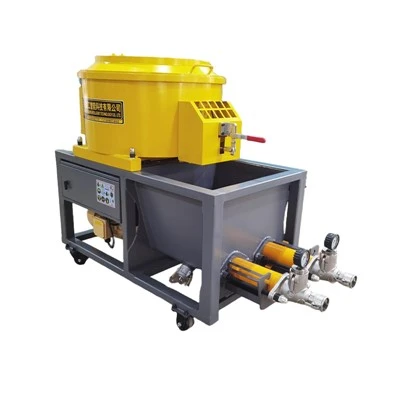
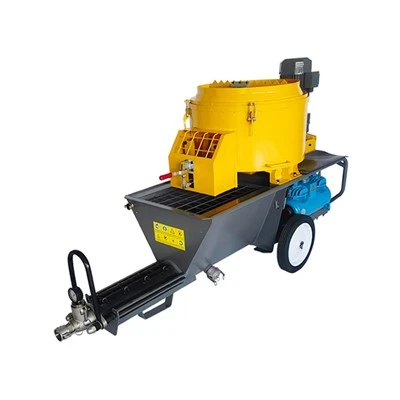
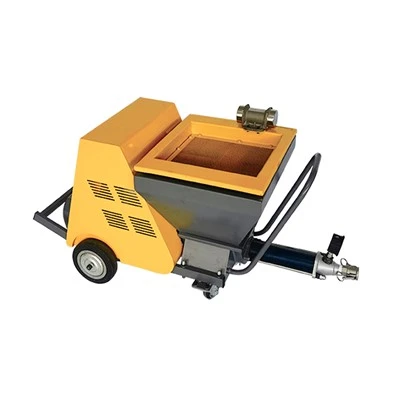
Now, let’s connect this to other tools you might use. If you’re looking for a continuous, steady flow of mixed mortar for larger jobs, we also have the Continuous Mixing Mortar Machine—great for big projects where you don’t want to stop and re-mix batches every few minutes. And for when you need a machine dedicated specifically to mixing mortar before spraying, check out the Mortar Mixing Machine for reliable batch mixing. If you’re working with pre-mixed materials that just need a quick blend, the Mixed Mortar Mixing Machine is perfect for speeding up prep time. For grout work, like sealing gaps in tile or stabilizing foundations, our Cement Grouting Machine (which is battery-compatible too) pairs perfectly with these sprayers. And when you’re ready to actually apply plaster or mortar, the Mortar Spraying Plaster Machine gives you consistent coverage that manual troweling just can’t match.
A lot of contractors ask me: is a battery-operated mixing sprayer worth the investment? Let’s do the math manually. If you’re a self-employed contractor, imagine how much time you waste mixing manually: 15 minutes per bucket, and if you’re doing 20 buckets a day, that’s 5 hours a day just stirring. A battery sprayer cuts that mixing time by 70%—you add the powder and water, hit a button, and it’s done. No more sore arms, no more mixing material that’s too thick or too thin because you guessed at the consistency. Also, the portability means you can move around a worksite way faster—no running back to an outlet or gas can every time you need to adjust where you’re spraying.
I’ll admit, there’s a learning curve at first. When you pull a new battery unit out of the box, you have to figure out the right pressure setting for your material, how to clean it properly after use (super important—if you leave mortar drying in the nozzle, it’ll clog forever), and how much water to add so the mix isn’t too runny or too thick. But once you get the hang of it, it becomes second nature. I’ve seen guys go from dreading plaster jobs to asking for them because the battery sprayer makes the work so much easier.
Another big plus: worksite noise and emissions. Most cities and residential areas have noise ordinances now, especially for renovations near homes. Battery-operated tools are way quieter than gas ones—you can have a normal conversation 10 feet away from the sprayer, no problem. And no exhaust fumes means you can use it in enclosed spaces, like a basement remodel where windows are closed, without worrying about fumes building up. That’s a huge safety win for everyone on the job.
Wait, let’s address a common concern: battery life. I’ve had customers say, “What if the battery dies mid-job?” The good news is that most quality battery mixing sprayers come with swappable batteries. So you can keep a spare charged in your truck, switch it out in 30 seconds, and get right back to work. No more waiting for a battery to charge on-site—you just slide a fresh one in and keep going. And modern lithium-ion batteries hold their charge for months when not in use, so you don’t have to worry about them dying while sitting in your toolbox for a weekend.
Now, who is a battery-operated mixing sprayer for? It’s not just for big crew leads or companies. If you’re a small contractor doing 1-2 bathroom remodels a week, it’s perfect. If you’re a handyman helping with a basement renovation, it’s way easier than renting a big electric sprayer that’s awkward to haul around. Even DIYers who are serious about their home projects (like finishing a garage or adding a patio) can use them—no fancy training needed, just follow the manual and practice on a scrap piece of wall.
Let’s talk about maintenance, because that’s something a lot of people overlook. The great thing about battery mixing sprayers is that they have fewer moving parts than gas or even large electric units. No engine to tune, no carburetor to clean, no spark plugs to replace. You just have to rinse the mixer paddle and spray hose with water after each use, take apart the nozzle and pick out any dried mortar, and wipe down the exterior. The battery itself only needs a charge every few months if you’re not using it, and if it does die after a few years, most brands sell replacement batteries at a reasonable price.
I’ve seen some misinformation online that says battery sprayers don’t have enough power for thick mortar. That’s true for cheap, no-name models, but the ones we supply have motors that are optimized for construction materials. They can handle up to a 1:4 mix ratio (1 part cement to 4 parts sand) with no problem, as long as you don’t overload the hopper. The key is to add the water first, then the dry powder, so the mix flows through the pump smoothly—no clogs, no strain on the motor.
Another thing: adjustability. Most battery mixing sprayers let you control the spray pressure and the flow rate. So if you’re doing a thin, skim coat of plaster on a wall, you can lower the pressure to get a fine, even spray. If you’re applying a thicker coat for a scratch coat, you can crank up the flow to get more material on the surface. That flexibility means you don’t need a separate tool for every job—one sprayer can handle multiple applications.
Let’s get real about the cost. A good battery-operated mixing sprayer might set you back a few hundred dollars, but when you compare it to renting a sprayer every week (which can cost $50-$100 a day), you’ll pay for it in 2-3 months of owning one. And since it’s yours, you can use it whenever you need it, instead of coordinating rental pick-ups and drop-offs around your schedule. For small contractors, that’s a huge financial win—no more wasting money on rental fees that add up fast.
Now, let’s wrap this up. A battery-operated mixing sprayer isn’t just another tool in your kit—it’s a time-saver, a body-saver, and a way to make your worksite safer and more efficient. It eliminates the hassle of cords and gas, cuts down on mixing time, reduces physical strain, and works for almost every small to mid-sized construction job.
If you’re tired of manual mixing, tripping over power cords, or wasting money on unreliable rental tools, it’s time to make the switch. We’ve been supplying mixing sprayers to contractors and DIYers alike for years, and we know we’ve got the right model for your needs—whether you’re working on a tiny bathroom remodel or a small commercial project.
Ready to learn more or find the perfect battery-operated mixing sprayer for your jobs? Reach out to our team to chat through your requirements, compare models, and get all the details you need to make a smart purchase. We’re here to help you work smarter, not harder.
References
- Construction Equipment Guide. (2023). "Portable Battery-Powered Construction Tools: Market Trends and Performance Data."
- National Association of Home Builders. (2022). "Small-Scale Remodeling Tools: Efficiency and Safety Benefits of Cordless Mixing Sprayers."
- Journal of Construction Engineering and Management. (2021). "Labor Productivity Improvements from Automated Mixing and Spraying Tools in Residential Renovations."