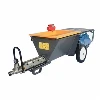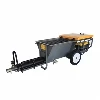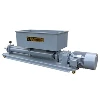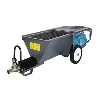
Based on the method of adding water to the concrete mix, it can be divided into three types: dry, wet, and semi-wet (a hybrid of both).
① Dry: Cement and aggregate are mixed evenly in a certain proportion, then blown through compressed air to the nozzle, where it mixes with pressurized water from a pressure tank before being sprayed out. This method is simple and fast, but produces a lot of dust, results in significant loss of rebound in the sprayed material, and requires high-grade cement. Most domestically produced concrete is dry-type.
② Wet: Water-added concrete mix enters the spraying machine. Therefore, the dust content during spraying is low, and the rebound is reduced, making it an ideal spraying method. However, wet materials are prone to condensation in the tank and pipelines, causing blockages and cleaning difficulties, thus limiting its widespread use.
③ Semi-wet: Also known as damp-mix, this refers to concrete mix with a moisture content of 5%~8% (by volume). This type of material produces less dust during spraying and, due to its lower adhesion compared to wet materials, does not stick to the tank. It is an improvement on the dry and wet methods.
According to the structural form of the spraying machine, it can be divided into three types: cylinder type, spiral type, and rotor type.
① Cylinder type. Cylinder type spraying machines are sturdy and durable. However, the machine body is too heavy, and the opening and closing of the upper and lower bell valves requires heavy manual operation, resulting in high labor intensity and easy pipe blockage. Therefore, it has been gradually phased out.
② Spiral type. Spiral type spraying machines have a simple structure, small size, light weight, and good mobility. However, when the conveying distance exceeds 30 m, it is prone to backflow, resulting in low and unstable productivity. It is only suitable for spraying support in small tunnels.
③ Rotary type. Rotary type spraying machines have advantages such as large production capacity, long conveying distance, continuous and stable output, low feeding height, convenient operation, and suitability for mechanized operations. They can be used for various spraying methods such as dry spraying, semi-wet spraying, and wet spraying, and are a widely used type of machine.