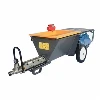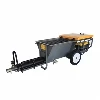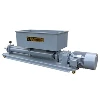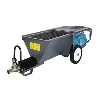
1. The hydraulic jacking system solves the problem of unstable positioning, and it's fast, achieving vertical and level fixation in approximately 10 seconds.
2. Combining two supports with traditional dot-matrix positioning solves the problems of slow, difficult, and inaccurate laser positioning.
3. The conveyor belt's forward and upward mortar delivery, combined with a large, angle-adjustable trowel, ensures complete coverage, leaving no gaps.
4. The vibrator and enlarged trowel solve the problems of hollow spots and cracks that easily occur with manual plastering. On absorbent walls, the maximum plaster thickness can reach 3 cm, and the minimum is 0.3 cm.
5. The angle-adjustable trowel solves the problem of the machine not being able to descend and smooth the surface along its original path.
6. The pull-out rod facilitates free docking at different heights and solves the problem of telescopic rods being unable to pass through construction holes. The machine is ready to use on site simply by inserting the uprights; no assembly is required. It can be transported without disassembly after removing the uprights.
7. The machine's working surface is 80 cm wide. For a wall, if you apply 80 cm wide sections, leaving 20, 30, or 50 cm wide areas, you only need to fill one side; no adjustments or sealing are required. Because the machine is immersed in mortar for extended periods, any adjustments or sealing are impossible.
8. The machine's conveyor belt can stop independently, for example, after passing a construction opening before continuing to deliver mortar, allowing you to fill areas above the opening.
9. Using the matching limit clamps, clamp the machine to the same height as the lintel to fill areas below the lintel. Similarly, by holding down the two levers that adjust the mortar angle below the window, you can fill areas below the window.
10. The mortar plate is designed to be wider than the machine body, making it easy to fill both inside and outside corners.