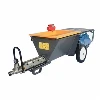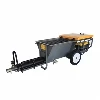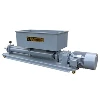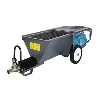
If you look into mortar spraying pumps for artificial rock jobs, you can sort them into three main groups based on their pumping mechanism: screw (rotor‑stator), piston (plunger), and squeeze (peristaltic) types.
I've worked on many rock‑building sites over the years, and screw pumps are what most of us end up using. The other two kinds come with real‑world limits that make them hard to rely on for this type of work.
Take piston pumps, for example. They push mortar in bursts, with pulses in the flow. This unstable movement can separate the mixed‑up materials inside the mortar. When that happens, you get a patchy surface once it dries. That's why piston pumps only work in very rare, specific conditions, and are not fit for general rock‑shaping work.
Then there are squeeze pumps. These machines are only built to run light‑weight mortar with zero coarse aggregates. This is a problem for rock projects. Our site mortar has aggregates and is quite thick and sticky. For that reason, squeeze pumps simply cannot get the job done here.
Screw pumps behave differently. They push mortar steadily, without stops or surges. This consistent flow gives an even spray finish, which meets the surface standards we need when forming artificial rocks. That explains why so many on‑site workers stick with screw pumps.
There are tons of screw pump choices available on our local market. It can be confusing, so you just need to watch a few key specs before placing an order.
First, think about rotor lead and eccentricity. From what we have seen on‑site, every one‑unit rise in rotor lead will add roughly 0.6 MPa of working pressure. A higher eccentricity value will boost the flow rate. You have to pick suitable values based on how complex your rock design is and how big the project runs.
Next, check out the drive motor. Many teams go for German NORD variable‑speed motors, or trusted local VFD motors of the same power level. Both keep pressure steady during long runs and handle mortar of different thicknesses.
Do not forget to check hopper size. When running large jobs, go for a hopper of 50L or above. A bigger hopper means fewer stops to refill material, so work can carry on with less interruption.
Also, keep an eye on the wearable spare parts. Rotors and stators wear down with use. Good wear‑resistant materials will slow this process and cut down unexpected downtime on‑site.
It makes sense to match your pump to the size of your project.
For medium‑to‑large projects such as urban park rock features, commercial site landscapes and tourism‑related rock builds, spray heights are often high, and we burn through plenty of mortar. These jobs need pumps that can deliver good pressure and higher flow rates.
A lot of crews pick the Wengong GP110 or GP90. Their performance lines up with German SEEPEX 2L4 and 2D8 models. They deliver 5‑8 m³ per hour, and handle large‑area spraying really well.
On smaller projects, like rock features in private gardens of high‑end residential areas or tiny scenic spots, material needs are lower and the working space is limited. Compact pumps work much better here.
Wengong GP70, GP60 and GP50 are solid picks. They match the performance of SEEPEX 2L54, 2L6 and 2L88. Their output sits at 2‑4 m³/h. Being lightweight and easy to move, they are great for fine spraying and shaping small rock structures.
One mistake I keep noticing on job sites: people run small pumps for large‑scale work. This puts the machine under constant overload. It wears down rotors and stators quickly, creates uneven spraying, and shortens the service life dramatically.
From all my site observations, picking the right mortar sprayer really boils down to matching equipment to your actual needs.
Always base your choice on project scale and the properties of your mortar mix. With a well‑suited screw pump and correct specs, you will maintain steady build quality, cut down part wear, boost productivity, and steer clear of costly delays and losses caused by bad equipment choices.