Keywords: sewer pipeline rehabilitation; mortar lining (spray-applied); mortar rehabilitation equipment; manhole rehabilitation
1. Introduction: Within urban infrastructure systems, drainage pipelines and manholes serve as a "lifeline," and their stable, efficient operation is essential for the proper functioning of a city. As urbanization accelerates and cities continue to expand, drainage pipelines and manholes face increasingly severe challenges. Issues such as aging, damage, and corrosion frequently arise, severely impairing the functionality of drainage systems and disrupting the daily lives and economic activities of urban residents. Traditional repair methods-such as those requiring excavation-suffer from numerous drawbacks: they involve long construction periods, often necessitating extended road closures or the suspension of drainage services, which causes significant inconvenience to urban traffic and residents. Furthermore, these methods are costly, entailing not only direct expenses for materials and labor but also indirect costs stemming from the impact on the surrounding environment and infrastructure. Additionally, excavation-based construction causes substantial damage to the urban environment, frequently generating dust and noise pollution, while also compromising road surfaces and local landscaping. Against this backdrop, trenchless repair technologies have emerged as an effective solution for addressing the challenges associated with repairing drainage pipelines and manholes. Offering advantages such as minimal environmental impact, rapid execution, and the preservation of existing road structures, trenchless technologies have become increasingly vital for the maintenance of urban drainage systems. Among these, mortar-spraying lining techniques for pipelines, culverts, and manholes have garnered growing attention and adoption, thanks to their unique technical characteristics, excellent repair outcomes, and cost-effectiveness.
2. Technical R&D Journey
2.1 Early Technology Introduction and Exploration: In the 1960s, domestic manufacturers of mortar construction machinery began to take note of advanced international mortar-pumping technologies. They pioneered the introduction of Putzmeister mortar-pumping technology from Germany, marking the beginning of exploration into the field of mortar spraying. At the turn of the 21st century, as urban infrastructure development in China accelerated-while the management and maintenance of drainage systems lagged behind-a clear demand for such technology began to emerge. Through the initial assimilation and absorption of the imported technology, construction firms began applying it to basic drainage pipeline rehabilitation projects, accumulating valuable experience that would later inform independent research and development.
2.2 Phase of Technical Refinement and Independent Innovation: With the rapid pace of urban development in China, requirements for the rehabilitation of drainage pipelines and inspection manholes became increasingly stringent. Building upon the imported technologies-and taking into account China's complex and diverse geological conditions, pipeline materials, and construction environments-researchers and relevant enterprises undertook extensive technical refinement and innovation. They developed a variety of specialized spraying processes and material formulations tailored to drainage pipelines of different diameters and compositions. For instance, they engineered high-strength, high-adhesion anti-corrosion mortar, ensuring that rehabilitated pipelines possess sufficient load-bearing capacity and sealing integrity. During this phase, breakthroughs were achieved in several key areas. A core technology integrating pressure spraying with uniform mixing was developed and successfully incorporated into various rehabilitation systems. By optimizing mixing processes and spraying equipment, developers ensured the consistent blending and stable delivery of spraying materials, which significantly enhanced both rehabilitation quality and construction efficiency. Concurrently, substantial progress was made in equipment R&D, with the creation of new types of rehabilitation machinery-such as rotary sprayers and specialized mortar-spraying units. These domestically developed systems have gradually surpassed the original imported equipment in performance, offering superior adaptability and reliability.
3 Key Technical Points
3.1 Integrated Pressure Spraying and Mixing Technology: The core of this technology lies in the seamless integration of mixing and spraying functions, allowing materials to be mixed thoroughly while being applied to the target area under stable pressure. Through a specially designed mixing mechanism and spraying system, both the spraying pressure and the mixing ratio of the materials can be precisely controlled to meet specific construction requirements. During the mixing phase, a unique blade design creates multi-directional, intersecting circulating vortices, ensuring that all components of the material are fully blended and enhancing the overall homogeneity of the mixture. In the spraying phase, pressure sensors facilitate remote control, while stepless mechanical transmission and variable-frequency drive (VFD) technologies enable precise pressure regulation. This ensures that the material adheres uniformly and firmly to the inner walls of pipelines or manholes. 3.2 Rotary Spraying Technology: Rotary spraying is a critical component of the in-situ mortar-lining repair process for drainage pipelines and manholes. The rotary sprayer is powered by a high-torque motor; mortar is delivered through a feed pipe integrated into the motor's hollow rotor, while the motor drives a high-speed rotary spray head. This design offers several advantages: first, the high spraying pressure ensures that mortar reaches every corner of the pipeline or manhole interior, guaranteeing comprehensive repair. Second, it produces a uniform mortar layer with strong adhesion; the centrifugal force generated by the high-speed rotating spray head ensures an even distribution of the mortar, creating a tightly bonded new lining. Furthermore, the thickness of the coating can be flexibly adjusted based on project needs-operators can precisely control the thickness by modulating parameters such as motor rotational speed and the duration of the spraying process.
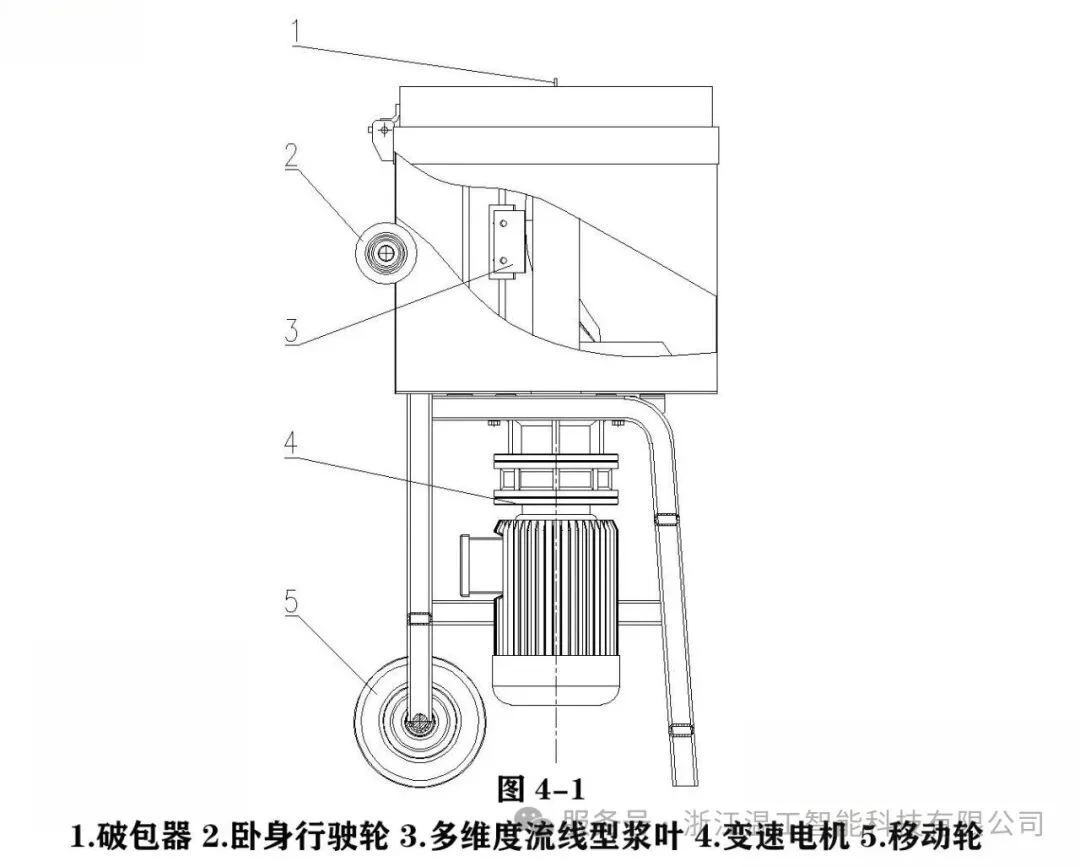
3.3 Trenchless Box Culvert Repair Technology: Specialized trenchless repair technology has been developed specifically for box culverts. This approach allows repair equipment to access the interior of a box culvert directly through a manhole, significantly improving construction efficiency and reducing project costs. The box culvert repair units consist of a compact mixer and a mortar spraying machine, which work in tandem. The mixer utilizes multi-dimensional, streamlined, inwardly curved blades to optimize the mixing process, ensuring the uniformity of the repair materials. The mortar spraying machine is designed to protect its internal components and ensure operational safety, allowing for stable performance within the challenging environment of a box culvert. Furthermore, these repair units are compact, easy to transport and operate, and well-suited to the restricted space and complex working conditions found inside box culverts-enabling a fully trenchless repair approach.
4. Functional Characteristics of Key Equipment
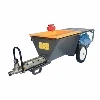
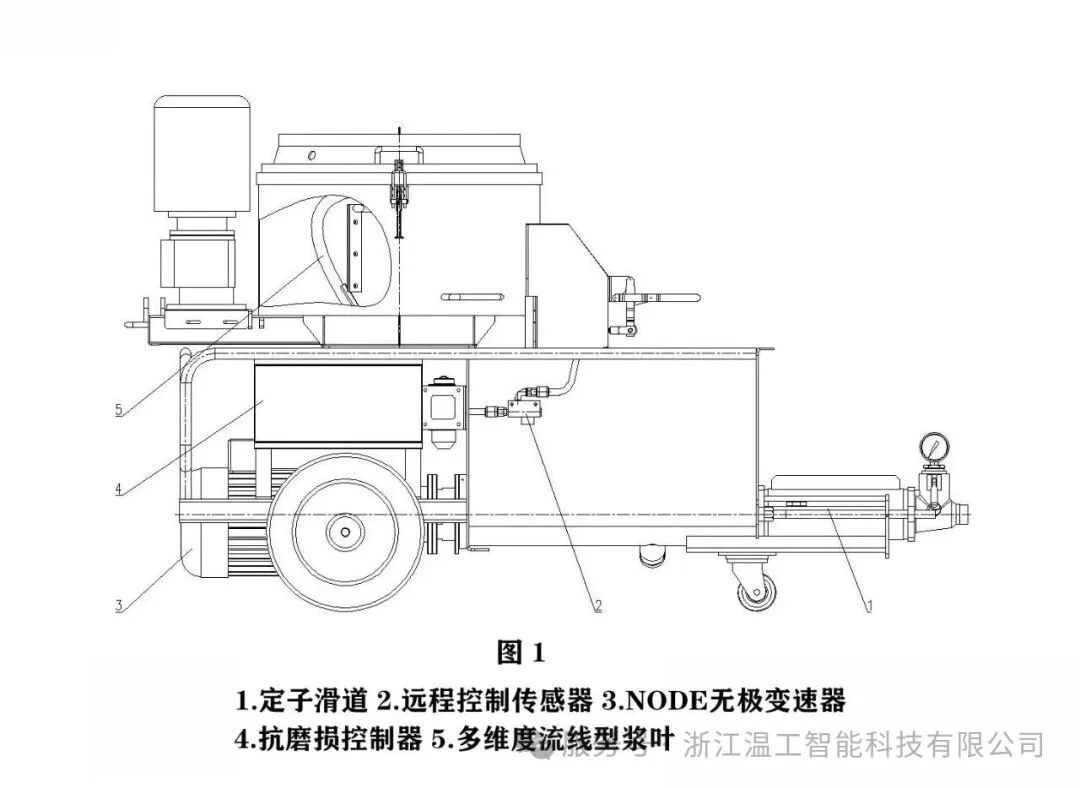
4.1 Mobile Mortar-Spraying Rehabilitation Machine for Drainage Pipelines and Manholes (Figure 1): This series of rehabilitation machines is available in various models based on their base mechanical output capacity, catering to construction projects of different scales. Equipped with a remote control system utilizing pressure sensors, the equipment allows operators to monitor and adjust the spraying process in real time from a safe distance. The inclusion of an anti-wear control and adjustment mechanism for the screw pump effectively extends its service life and reduces maintenance costs. The screw pump's rotor-stator assembly can be easily loaded or removed on-site, facilitating convenient equipment maintenance and servicing. Through stepless speed regulation, the operating pressure and output capacity can be adapted to the transport and spraying requirements of a wide range of polymer-based mortars. The vertical mixing chamber features specialized, curved, multi-profile mixing blades; during operation, these generate powerful radial and axial flows, creating complex, multi-directional circulating vortices. This significantly enhances mixing efficiency and ensures consistent quality of the sprayed materials. Furthermore, the equipment is fitted with a high-quality mechanical speed regulator from the German company NODE, which enables precise control over output and pressure. As the torque remains unaffected by external factors, the stability of the mortar during the spraying process is guaranteed, effectively preventing issues such as clogging, stalling, or flow interruptions.
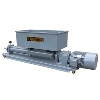
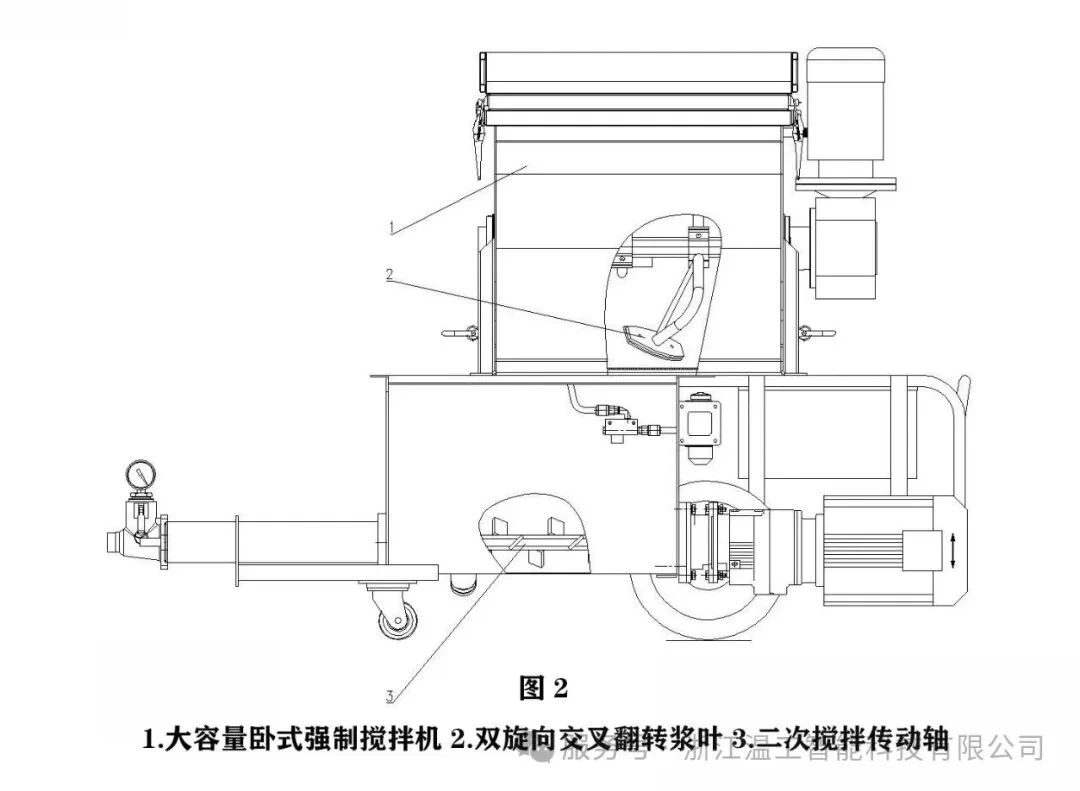
4.2 Large-Capacity Forced-Action Mixer Unit (Figure 2): This equipment utilizes a large-capacity, horizontally oriented forced-action mixer featuring a unique paddle design. During the mixing process, the paddles exert powerful shear and compressive forces on the material, effectively breaking up agglomerations of particles and fibers. This process further refines the material particles, thereby enhancing the performance of the sprayable materials. Through its distinctive folding-and-turning action, the horizontal forced-action mixer significantly improves both mixing efficiency and uniformity. It performs exceptionally well when processing high-strength, fiber-reinforced mortars, ensuring that all fine-aggregate particles are thoroughly coated and the mixture is perfectly homogeneous. The horizontal configuration also facilitates the discharge process; the discharge rate can be flexibly adjusted to suit various construction scenarios and technical requirements, which enhances operational flexibility and adaptability.
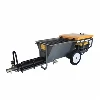
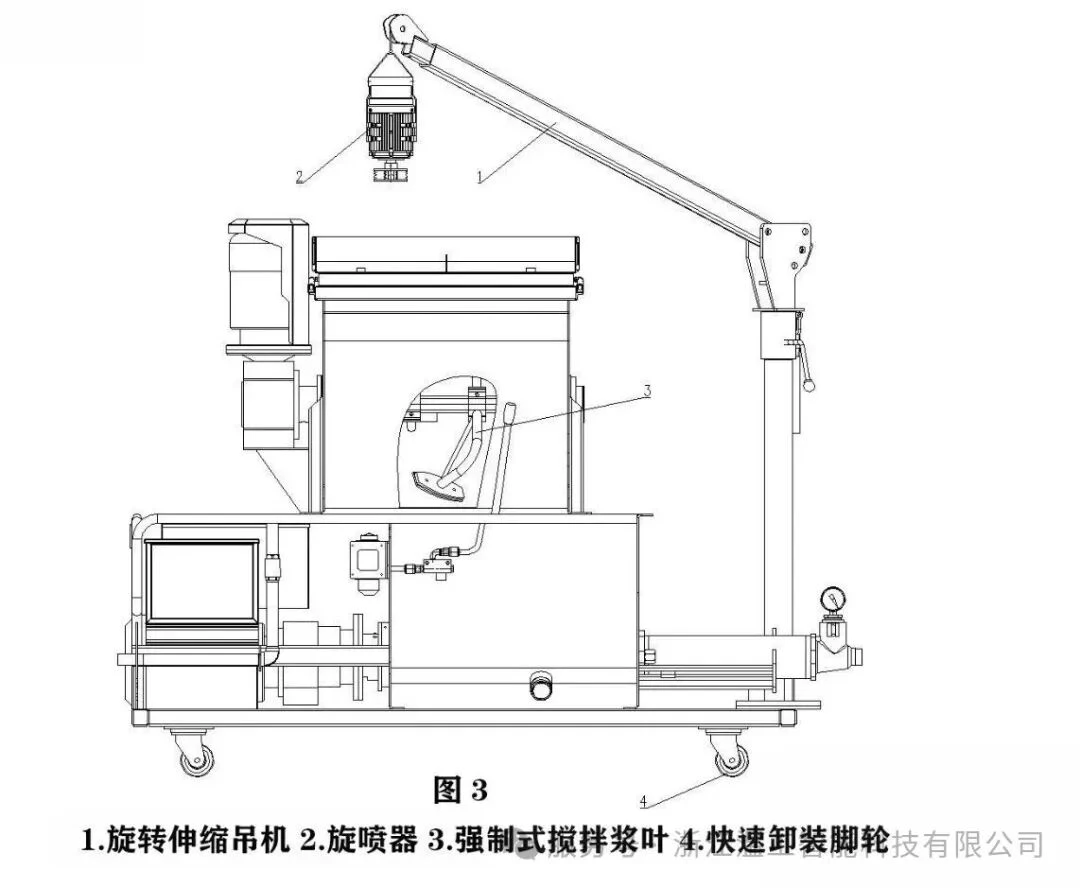
4.3 Vehicle-Mounted Mortar-Lining Repair System for Drainage Pipelines and Manholes (Figure 3): This series comprises two main categories with various models offering different output capacities, allowing for selection based on specific project requirements. Designed for convenience, the system can be securely installed within a work vehicle or, thanks to its quick-release casters, deployed for on-site operation outside the vehicle. It features an integrated, rotatable, and telescopic boom, which facilitates the handling and operation of other construction equipment. This multifunctional unit serves as a comprehensive mobile platform: it accommodates pre-treatment equipment, inspection instruments, self-propelled mortar-lining repair units, and towing machinery, while also carrying traffic warning signs and safety barriers to ensure the complete protection of personnel and equipment. In environments lacking a power or water supply-or during nighttime operations-the onboard generator set and water tank provide immediate solutions. Furthermore, the vehicle can transport necessary construction materials, offering a one-stop solution for all required machinery and supplies, thereby significantly enhancing construction efficiency and shortening project timelines.
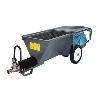
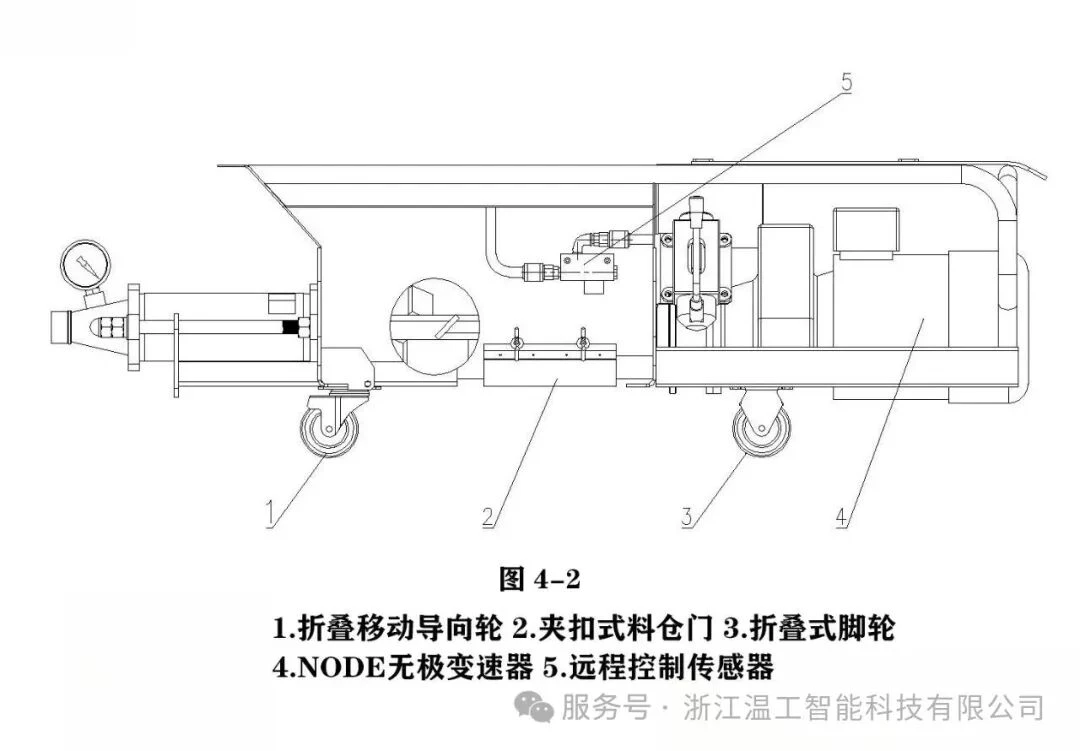
4.4 The trenchless mortar-spraying rehabilitation system for box culverts (Figures 4-1 and 4-2) consists of a specialized mixer and a mortar-spraying machine. It represents a state-of-the-art, trenchless mortar-spraying rehabilitation technology for box culverts in China. The entire system can be lowered into a box culvert through an access manhole, enabling large-scale mortar-spraying repairs within confined spaces. Despite its compact design, the system offers mixing and spraying performance comparable to conventional, larger-scale equipment, ensuring high operational efficiency. Compared to traditional excavation-based methods, it significantly reduces project investment costs. Furthermore, the equipment is easy to transport, load, and unload, which lowers both construction complexity and expenses. The mixer utilizes multi-dimensional, streamlined, inwardly curved blades to optimize the mixing process and guarantee the quality of the mortar material. The mortar-spraying machine features protective housing for its internal components to ensure operational safety, allowing it to function reliably within the complex environment of a box culvert and providing dependable technical support for culvert rehabilitation projects.
4.5 The manhole rotary-spraying unit (Figure 5) consists of a rotary-spraying frame and a sprayer. The frame features an efficient structural layout, allowing operators to precisely adjust the spraying speed and the thickness of the mortar layer based on specific site conditions, thereby ensuring high-quality repairs. Utilizing a system of hooks, quick-release clamps, and sleeve connections, the unit can be assembled or disassembled rapidly without the need for additional tools; it is simple to operate, compact when stowed, and convenient to transport and store. Equipped with mobile wheels, the unit offers enhanced maneuverability, reduces physical exertion for operators, and boosts construction efficiency. A high-power micro-winch provides robust drive, ensuring precise and forceful spraying for smooth operation. The sprayer is powered by a high-torque motor that delivers strong spraying pressure, resulting in a uniform mortar layer with high tensile bond strength. The unit maintains a stable center of gravity during operation, and the coating thickness is adjustable, effectively meeting the diverse requirements of manhole repair projects.

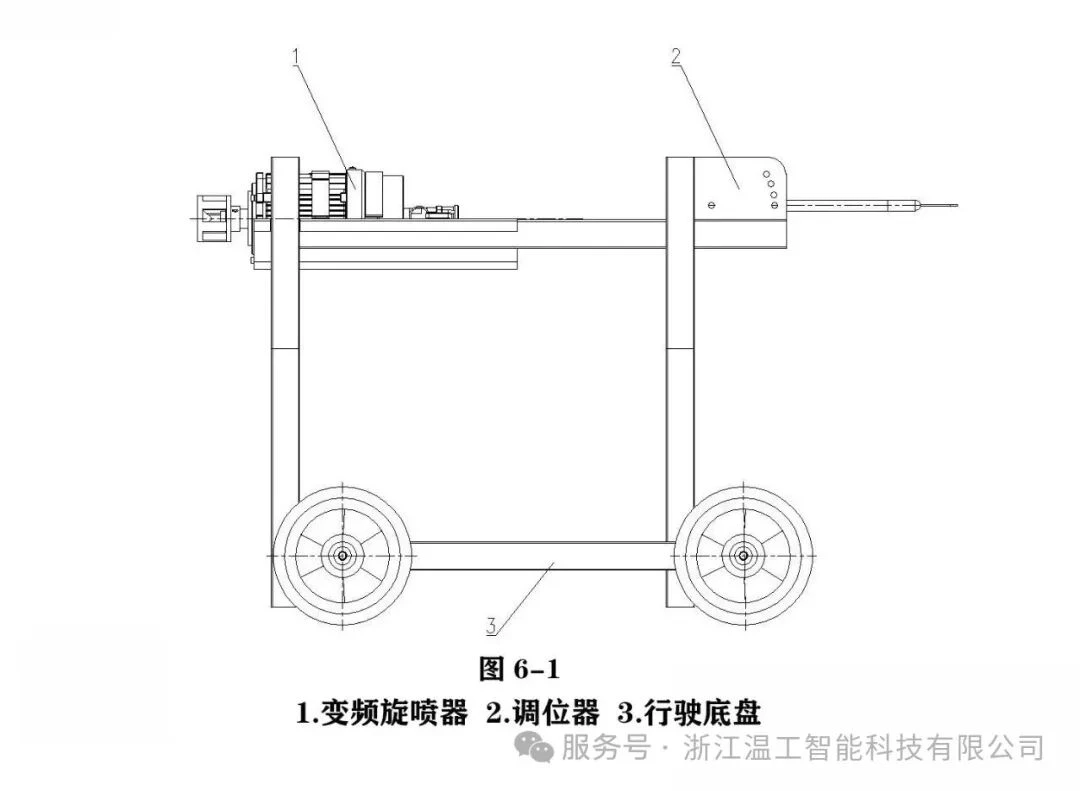
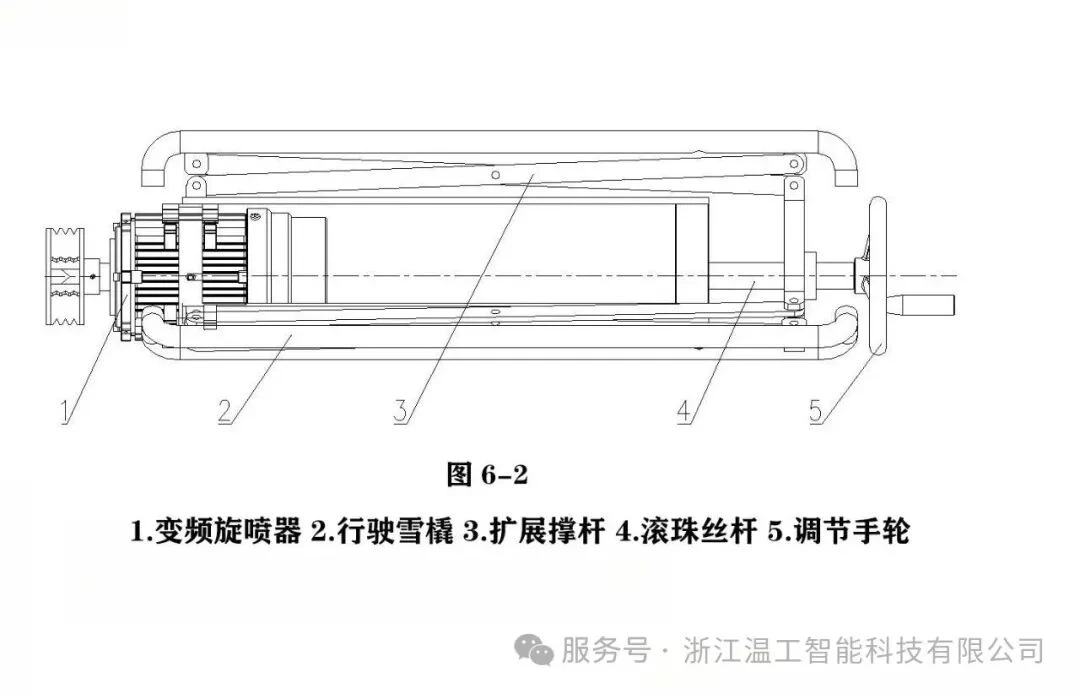
4.6 The towed, mobile mortar-lining repair rig for pipelines (Figures 6-1 and 6-2) comes in two configurations-wheeled and sled-mounted-designed for use in pipes with smooth or corrugated inner walls, respectively. Equipped with a high-power rotary sprayer, the rig ensures that the newly applied mortar lining adheres firmly, remains uniform and dense, and possesses high tensile bond strength. Offering low construction costs and a capacity to handle pipe diameters ranging from 300 mm to 2000 mm, this equipment is widely used for trenchless mortar-lining repair projects in various types of drainage pipelines, serving as an economical and highly efficient solution.
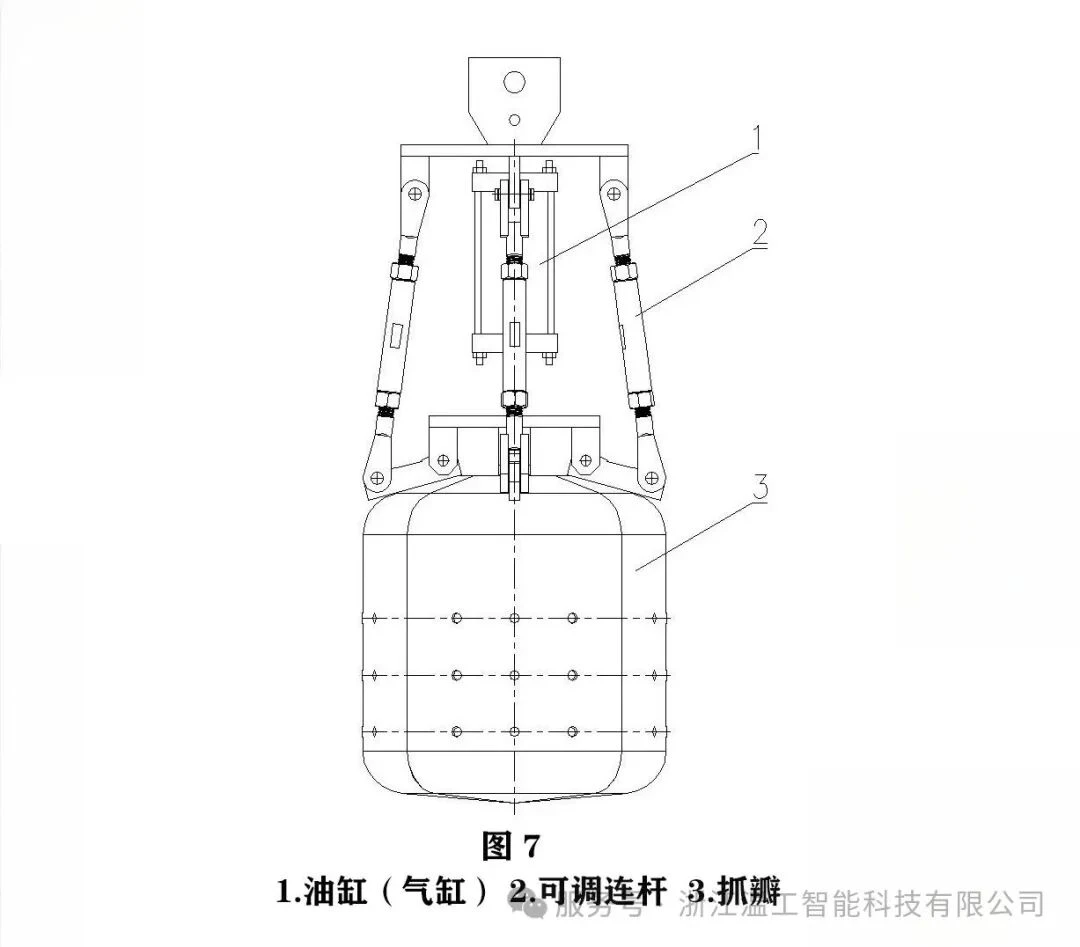
4.7 The sludge grab (Figure 7) is designed for the pre-treatment phase of manhole rehabilitation. Featuring a sophisticated design and lightweight, easy-to-handle operation, it can be used flexibly when paired with a small crane arm. The grab can be powered by either hydraulic or pneumatic systems-allowing for flexible selection based on existing equipment-and eliminates the need for personnel to manually enter manholes to remove sludge and debris. This effectively ensures the safety of workers operating in confined spaces or environments potentially containing hazardous gases. Furthermore, it reduces construction costs and enhances operational efficiency, enabling safe and highly productive work.
5 Market Application Examples
5.1 Domestic Applications: In China, this technology and its associated equipment have been widely applied in drainage system rehabilitation projects across major cities. In Beijing, for instance, many drainage pipelines and manholes in older residential areas had become aged or damaged, significantly affecting residents' daily lives. By employing mortar-lining spray rehabilitation technology, these pipelines and manholes were successfully restored without the need for large-scale road excavation-a solution that greatly shortened construction timelines and minimized disruption to residents. In Shanghai, given the city center's heavy traffic and complex underground utility network, specialized truck-mounted spray-lining equipment for drainage pipelines and manholes-as well as trenchless mortar-spraying units designed for box culverts-were used to carry out efficient repairs. This ensured the continued, proper operation of the urban drainage system while reducing construction-related traffic interference. 5.2 International Applications: This technology has also seen extensive use in international markets. In a city in Southeast Asia, where a humid climate led to severe corrosion of drainage pipelines-rendering traditional repair methods ineffective-the introduction of in-situ mortar-lining spray technology successfully resolved the rehabilitation challenges, enhanced urban drainage capacity, and improved the local environment. In Australia, for drainage pipeline rehabilitation projects involving challenging geological conditions, the use of rotary-spraying technology and specialized equipment enabled efficient, high-quality repairs, earning high praise from local contractors and project owners alike.
6. Impact on Industry Development
6.1 Driving Technological Advancement: The development of in-situ mortar-lining spray-repair technology has spurred technological progress across the entire drainage pipeline and manhole rehabilitation sector. Continuous technical innovation and equipment R&D have encouraged other enterprises in the industry to increase their own research investments, thereby accelerating the upgrading of related technologies and equipment. For instance, in the realm of material development, the requirements for in-situ mortar-spraying rehabilitation of culverts and pipelines have led to the emergence of new polymer-based spray materials. These materials offer superior strength, enhanced adhesion, and greater corrosion resistance, which in turn improve both the quality of repairs and the service life of the infrastructure.
6.2 Promoting Standardization: As this technology has gained widespread adoption, the "Technical Specification for Trenchless Mortar-Spraying Rehabilitation of Pipelines"-reviewed and approved by experts under the auspices of the China Association for Engineering Construction Standardization-is set to be released. Industry standards and specifications are becoming increasingly comprehensive; clear requirements and criteria have been established for construction processes, equipment performance, and material quality, providing a solid foundation for the standardized development of the sector. This not only helps elevate overall construction standards and ensure project quality but also fosters fair market competition and supports the healthy growth of the industry. 6.3 Expanding Application Domains: The successful implementation of in-situ spray-lining technology for drainage pipelines and manholes has broadened the scope of trenchless rehabilitation. Beyond its traditional use in drainage systems and manholes, the technology is now increasingly applied to the repair and maintenance of other underground utility lines-such as those for power and telecommunications-as well as to the restoration of channels and culverts in water conservancy projects. This provides robust support for the comprehensive maintenance and upgrading of urban infrastructure.
7. Conclusion and Prospects: As an advanced trenchless rehabilitation method, spray-applied lining technology for drainage pipelines and manholes has seen significant development and progress over the past few decades. Through continuous technical innovation and equipment R&D, this technology has demonstrated clear advantages in terms of repair effectiveness, construction efficiency, and cost control. It has been widely adopted in both domestic and international markets, making a vital contribution to the maintenance and upgrading of urban drainage systems. Looking ahead, with the ongoing advancement of urban infrastructure and increasingly stringent environmental protection requirements, spray-applied lining technology is poised for even broader development. On one hand, it is essential to increase investment in R&D to further enhance technical capabilities and equipment performance-for instance, by developing smarter rehabilitation equipment that enables automated process control and remote monitoring, or by exploring and promoting the use of innovative spray-applied materials to improve repair outcomes and durability. On the other hand, fostering industry-wide communication and collaboration is crucial to facilitate the sharing and dissemination of technology, cultivate professional talent, and drive the sustainable and healthy growth of the entire sector. It is anticipated that, through the concerted efforts of all stakeholders, spray-applied lining technology will play an even greater role in urban infrastructure development, contributing significantly to the creation of more livable and business-friendly urban environments.