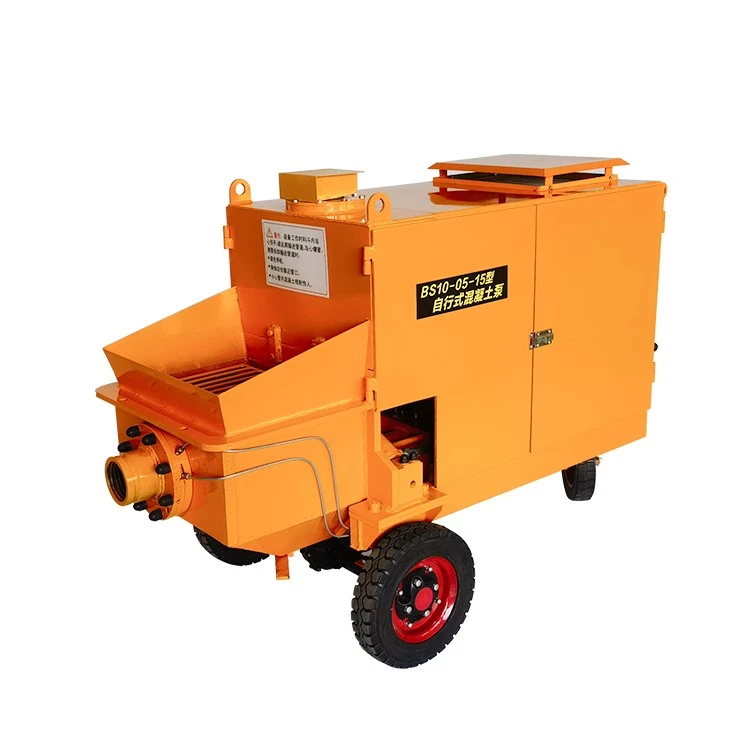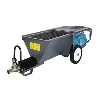
Early explorations of concrete pumps began in the early 20th century. The French obtained the first patent for a concrete pump in 1902, Germany began researching it in 1907, and the United States manufactured the first concrete pump in 1913, but it failed to find application. In 1927, Fritz Heil of Germany designed and manufactured the first concrete pump, which was then put into use for the first time. In 1932, the Dutchman Kuijmann modified the vertical cylinder to a horizontal cylinder, creating the Kuijmann-type concrete pump, laying the foundation for modern concrete pump technology.
In 1957, Schwing invented the world's first hydraulic twin-cylinder piston pump for conveying concrete. In 1959, Schwing produced a truly fully hydraulic concrete pump, laying the technological foundation for modern concrete pumps. In the 1960s, pump trucks with conveying booms were invented, evolving concrete pumps from stationary to mobile, vehicle-mounted types. In 1982, the world's first large-boom concrete pump truck, the M52, was launched. In the same year, the Hubei Construction Machinery Plant in China introduced Japanese technology, ending the lack of ready-mixed concrete pumps in China.
On July 1, 1993, Zoomlion Research and Development Co., Ltd. successfully developed the first HBT40 concrete pump, marking a new era in the localization of concrete conveying machinery in China. After the 1990s, China's concrete pumping machinery made significant progress, forming a leading group represented by Sany and Zoomlion. Since the 21st century, concrete pump trucks have developed towards longer booms, larger displacements, intelligent systems, and greener technologies (such as electrification and hydrogen energy).