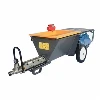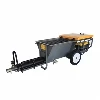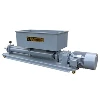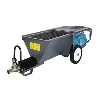
Requirements for Concrete Mixture. The quality of shotcrete spraying is greatly influenced by the mix proportions. Specific requirements are:
1) Cement. 32.5 grade Portland cement should be used;
2) Aggregate. It should be sieved before use, with a maximum particle size not exceeding 20mm; its moisture content should be controlled within 5%–8% (volume fraction);
3) Accelerator. The admixture dosage is 3%–4% of the cement mass, and it should be added before spraying;
4) Concrete Mix Proportion. A cement:sand:aggregate ratio of 1:2:2 to 1:2:2.5 is preferred.
Work Site. The shotcrete machine should be placed in a spacious, safe, dry, well-ventilated location with convenient material handling. It should also be placed as close as possible to the work surface to be shotcreted to reduce the amount of ventilation, water, and electrical wiring required, thereby reducing pipe wear.
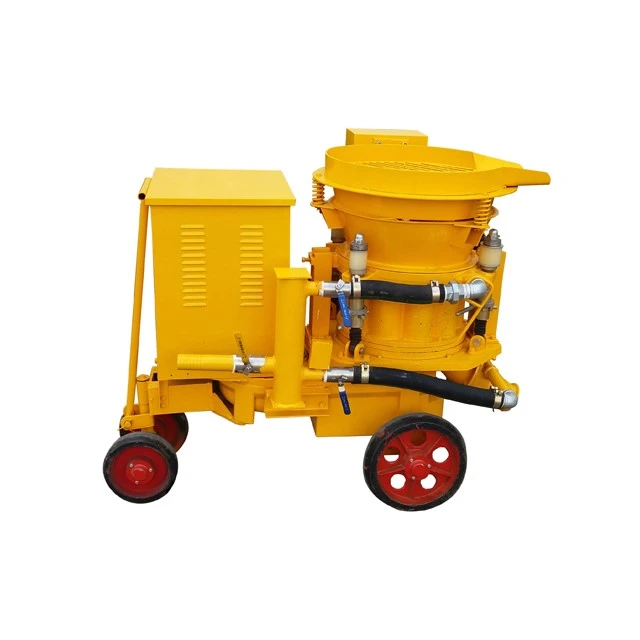
Preparations before start-up:
1) Check that the circuit, air circuit, and material conveying pipe connections are secure and reliable. Ensure the water source is clean and has appropriate pressure.
2) Before initial start-up, add lubricating oil to the reducer and check the oil level. Ensure sufficient oil volume.
3) Briefly start the motor and check that the rotation direction matches the indicator sign.
(4) During operation, maintain a certain amount of material in the hopper to ensure uniform and continuous feeding.
(5) When adding material, pour it gently and promptly remove any remaining coarse aggregate from the vibrating screen.
(6) During spraying, the sprayer should adjust the water volume appropriately based on the moisture content of the mixture and keep the nozzle perpendicular to the sprayed surface as much as possible. The spraying distance should be controlled between 500 and 800 mm. The sprayer should always stand within the sprayed concrete support surface. Under no circumstances should the nozzle be pointed towards areas with personnel activity.
(7) When the operation is finished, the machine should continue to run for a period of time after the feeding is stopped to allow the remaining material in the material chamber and pipes to be blown away. If there is any remaining quick-setting agent in the feeder hopper, the cover should be closed to prevent moisture, clumping and impurities from entering.