In modern urban construction, pipelines are a crucial component of urban infrastructure. However, with the passage of time and the aging of pipelines, damage and leakage problems gradually emerge, causing considerable inconvenience to urban operations and residents' lives. To address this issue, trenchless pipeline repair technology has emerged. This technology eliminates the need for large-scale excavation, offering advantages such as short construction cycles, low costs, and minimal environmental impact, thus gaining widespread application in urban pipeline repair. So, what equipment is needed for trenchless pipeline repair? This article will provide a detailed introduction.
First, we need to clarify the classification of trenchless repair technologies. Based on different repair needs and pipeline damage conditions, trenchless repair technologies are mainly divided into pipe lining, pipe spraying, and partial pipe repair methods. These technologies each have their own characteristics, and the required equipment also differs.
1. Pipe Lining Repair Equipment
Pipe lining is a method of restoring pipeline function by installing a new pipe or lining inside the damaged pipeline. The equipment required for pipe lining repair mainly includes:
(1) Lining pipe production equipment: used to produce the required lining pipes. Common lining pipes include HDPE (high-density polyethylene) pipes and PVC (polyvinyl chloride) pipes.
(2) Hot melt welding machine: used to heat-melt the lining pipe to the damaged pipe to ensure a firm connection.
(3) Pipe expander: used to expand the lining pipe to match the inner diameter of the damaged pipe, making it fit tightly inside the damaged pipe.
(4) Cutting equipment: used to cut the damaged pipe in preparation for installing the lining pipe.
2. Pipe spraying repair equipment
Pipe spraying is a method of restoring pipe function by spraying special materials inside the damaged pipe. The equipment required for pipe spraying repair mainly includes:
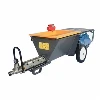
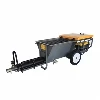
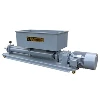
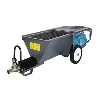
(1) Spraying equipment: including spraying machines and spray guns, used to evenly spray special materials inside the damaged pipe.
(2) Surface treatment equipment: Used to clean and remove rust from the inside of damaged pipes, providing good adhesion conditions for sprayed materials.
(3) Drying equipment: Used to dry the sprayed material, allowing it to better solidify inside the damaged pipe.
3. Equipment for Local Pipe Repair
Local pipe repair is a method for repairing localized damage to pipes. The equipment needed for local pipe repair mainly includes:
(1) Local repair clamps: Used to fix the damaged pipe area and prevent the repair material from leaking out.
(2) Repair materials: Such as epoxy resin, polyurethane, etc., used to fill and solidify the damaged area.
(3) Grouting equipment: Used to inject the repair material into the damaged area, ensuring sufficient filling.
In addition to the above equipment, some auxiliary equipment is also needed for trenchless pipe repair, such as pipe inspection equipment (used to detect pipe damage), ventilation equipment (used to ensure good ventilation at the construction site), and lighting equipment (used to provide sufficient lighting).
In summary, trenchless pipeline repair requires the use of various equipment, which together constitute the hardware foundation of trenchless repair technology. When selecting and using this equipment, a reasonable combination and selection must be made based on specific repair needs and the extent of pipeline damage to ensure optimal repair results. Simultaneously, construction personnel need to be proficient in the operation skills and safety regulations of various equipment to ensure the smooth progress of the construction process.
With continuous technological advancements, trenchless repair technology is also constantly innovating and improving. In the future, with the emergence of new materials and processes, trenchless repair technology will become more mature, efficient, and environmentally friendly, providing even better solutions for urban pipeline repair.